20+ Monstera Trellis Ideas for Beautiful Climbing Plants
Monstera plants look stunning when they climb naturally, but without the right support, those large leaves and long stems can quickly spread in every direction.
Adding a basic stake may help at first, yet mature plants often need something stronger and more attractive. A good trellis supports upward growth while keeping your Monstera neat and giving its beautiful foliage room to stand out.
Once you choose a support that suits the plant and your space, training new growth becomes much easier.
In this article, I’ll share 20+ Monstera trellis ideas to inspire a beautiful climbing setup for your plant.
Let’s get started!
Bamboo Ladder Trellis
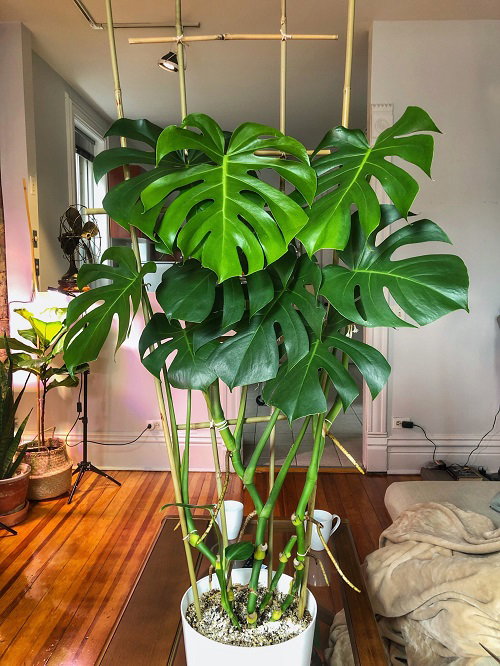
Bamboo poles offer a sturdy frame for heavy potted plants. This simple setup uses vertical sticks tied together with horizontal crossbars to build height inside the pot. Thick main stems sit secured to the lower bars with gentle plant ties. Strong wooden stakes hold large green leaves upright, giving aerial roots plenty of room to stretch.
What Makes It Work:
- Natural look: Smooth bamboo stems blend easily with lush foliage.
- Tall support: Vertical poles provide room for ongoing upward growth.
- Easy assembly: Standard garden stakes and twine quickly create a solid frame.
The Downside: Dry bamboo lacks moisture, so aerial roots cannot grip the wood directly. You must manually fasten rising stems using soft ties to keep the plant stable over time.
Wall Mounted Wooden Lattice Trellis
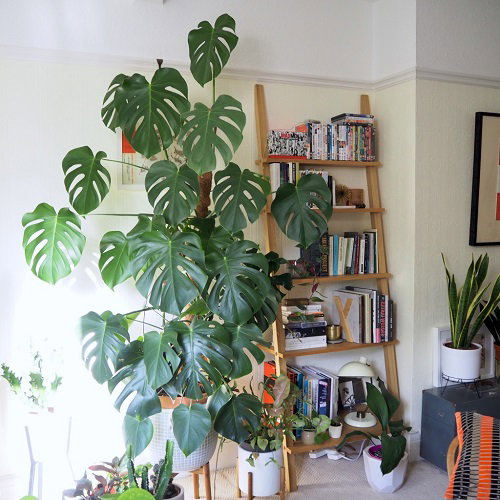
Placing a wooden lattice frame right behind the planter gives heavy stems structural backing against a wall. This setup lets large green leaves spread outward safely without tipping the container forward. Sturdy wooden slats offer multiple attachment points to secure long vines as they grow upward toward room arches.
What Makes It Work:
- Space saving: Anchoring support against a wall frees up valuable floor space.
- Broad structure: Wide horizontal bars easily accommodate wide-spreading leaf arrangements.
- Solid base: Flat wood panels hold heavy plant weight without leaning.
The Downside: Permanent wall placement limits your ability to rotate the pot for balanced sunlight. Vines must remain secured manually since roots will not grip smooth painted wood.
Leaf Shaped Wire Metal Trellis
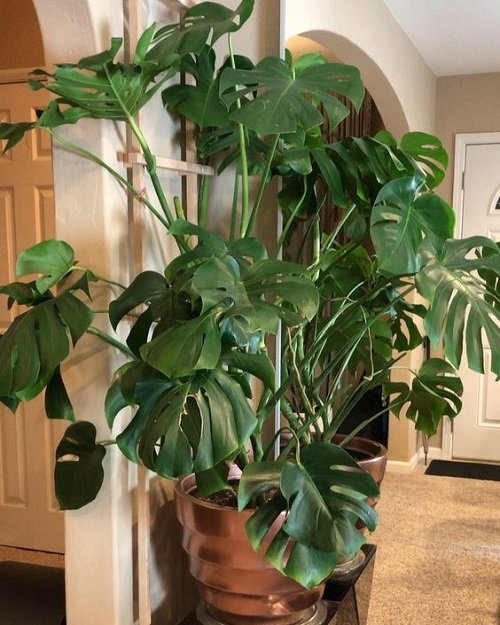
A decorative metal frame shaped like a large leaf brings an artistic touch to indoor plant setups. Dark coated wire curves upward inside the pot, matching the natural lines of growing foliage. Long stems lean securely into the open wire grids as new shoots reach toward bright windows.
What Makes It Work:
- Decorative appeal: Sculptural leaf design adds visual interest even before foliage covers it.
- Slim profile: Narrow metal wires slip into medium pots without crowding root space.
- Durable build: Sturdy metal construction resists bending under heavy indoor growth.
The Downside: Smooth metal rods give aerial roots nothing to hold onto organically. You will need garden wire or ties to keep growing stems attached.
Floor to Ceiling Coco Coir Pole
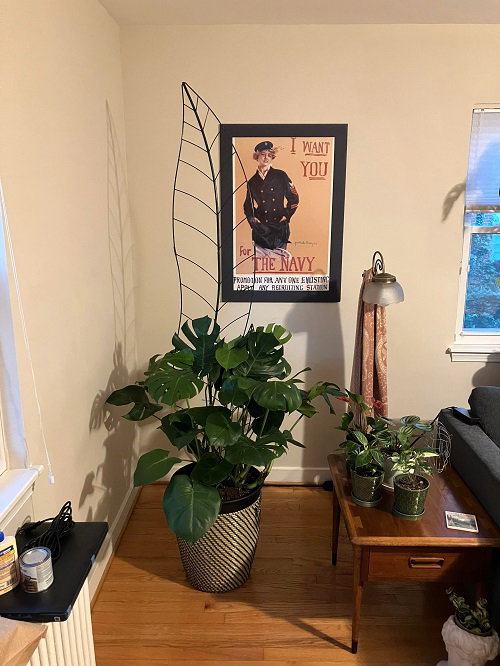
Tall vertical moss posts provide continuous vertical support for massive indoor plants. Extra length allows climbing Monstera vines to reach impressive heights indoors while growing larger, deeply cut leaves. Long aerial root strands naturally hang down the textured pole toward the soil below.
What Makes It Work:
- Maximum height: Enables extreme vertical growth for mature houseplant displays.
- Textured surface: Rough fibrous material gives aerial roots grip and stability.
- Central anchor: Single thick pole keeps large pots visually balanced.
The Downside: Extremely tall poles require high ceilings and stable pot bases to avoid tipping. Reaching top sections for misting or pruning can prove difficult.
Bamboo Obelisk Teepee Structure
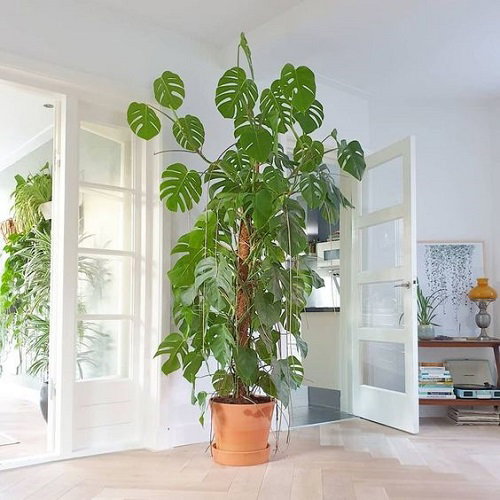
Positioning several bamboo canes in a pyramid shape creates a self-supporting teepee frame inside the container. Gathering the stakes at the top forms a stable tripod that surrounds inner stems. Green leaves push outward through open sides, creating a full, bushy look in brightly lit rooms.
What Makes It Work:
- High stability: Tripod design prevents individual stakes from leaning under weight.
- Budget friendly: Simple bamboo sticks offer an affordable DIY structural solution.
- 360 degree support: Surrounding stakes protect outward-reaching stems from all sides.
The Downside: Tied top stakes constrain upper growth once vines reach the apex. Adjusting internal plant ties becomes tricky as foliage grows dense inside the frame.
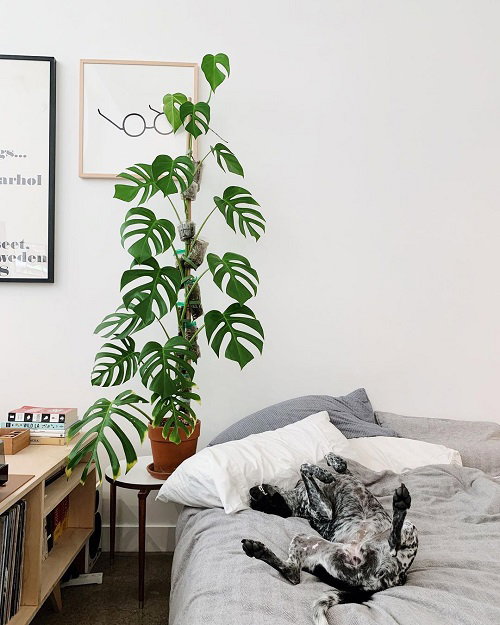
Central Wooden Stake with Sphagnum Moss Pouches
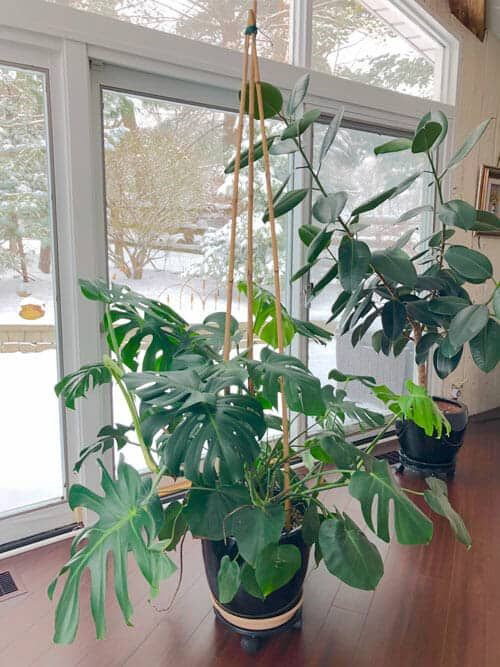
Single wooden posts wrapped with individual moss bundles offer targeted support for upward growth. Small plastic mesh pouches containing damp sphagnum moss sit tied along the stake near node points. Stems stay secure while aerial roots grow directly into the moist pockets.
What Makes It Work:
- Targeted moisture: Concentrated moss packs give roots wet spots to cling to easily.
- Clean design: Slim vertical profile keeps small pots neat while expanding upward.
- Simple adjustments: Modular pouches move to higher nodes as new leaves emerge.
The Downside: Individual moss bags dry out quickly in warm indoor air. You must water each pack separately to maintain root hydration.
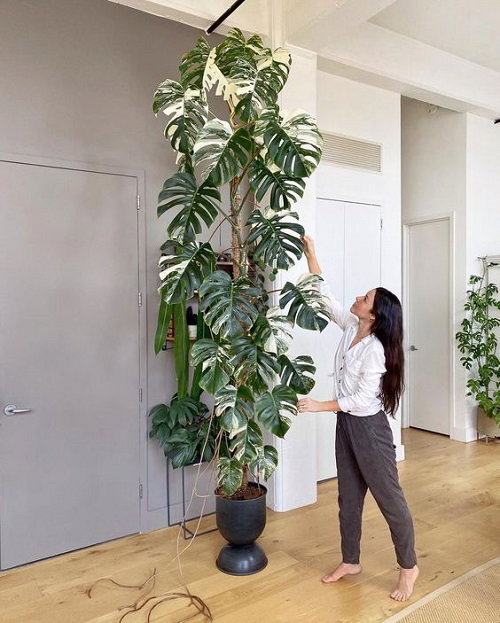
Floor Standing Moss Pole Extension
Sturdy extended moss poles accommodate massive variegated foliage. Thick central posts guide heavy vines upward toward high indoor ceilings. Long aerial roots reach down the pole into the black container base.
What Makes It Work:
- Heavy duty capacity: Thick central structure carries massive, heavy variegated leaves safely.
- Root encouragement: Extended fibrous surface gives aerial roots room to anchor properly.
- Vertical emphasis: Tall design turns large indoor plants into striking room features.
The Downside: High poles require substantial floor space and a heavy base to prevent tipping. Higher leaves become difficult to prune or clean without extra equipment.
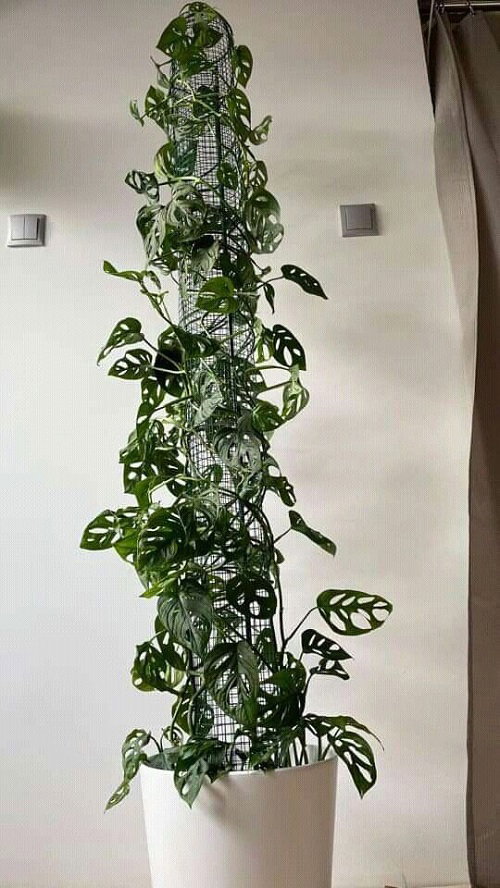
Cylinder Wire Mesh Moss Tower
Black wire mesh rolled into a tall cylinder creates a hollow vertical column filled with growing media. Vine stems wind around the exterior while aerial roots push inside the open mesh gaps. Deep green leaves shoot outward in all directions for full coverage.
What Makes It Work:
- 360 degree climbing: Circular wire layout allows stems to climb every side evenly.
- Internal volume: Hollow column holds plenty of moist moss for healthy root attachment.
- Rigid build: Strong wire mesh maintains shape without bending under plant weight.
The Downside: Filling and packing the internal mesh column requires extra setup effort. Removing established roots from inside the wire grid proves difficult during repotting.
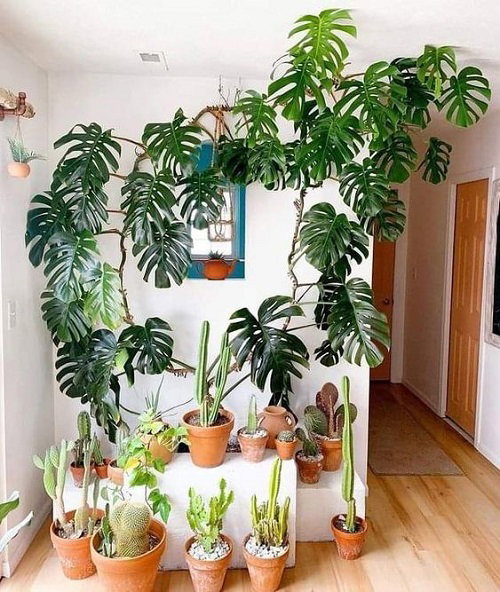
Wall Mounted Wooden Frame Arch
Curved wooden frames mounted against indoor walls guide massive vines around room features. Long thick stems attach along flat wooden slats to create a sprawling green canopy overhead. Broad split leaves fill empty wall areas while keeping floor space clear.
What Makes It Work:
- Architectural framing: Shapes mature vines around doorways and wall corners cleanly.
- Structural balance: Secure wall anchors support heavy long stems effortlessly.
- Expansive display: Opens up plant growth across large indoor wall spaces.
The Downside: Installation requires permanent wall fasteners and fixed indoor placement. Trimming dense upper growth near ceiling level takes regular effort.
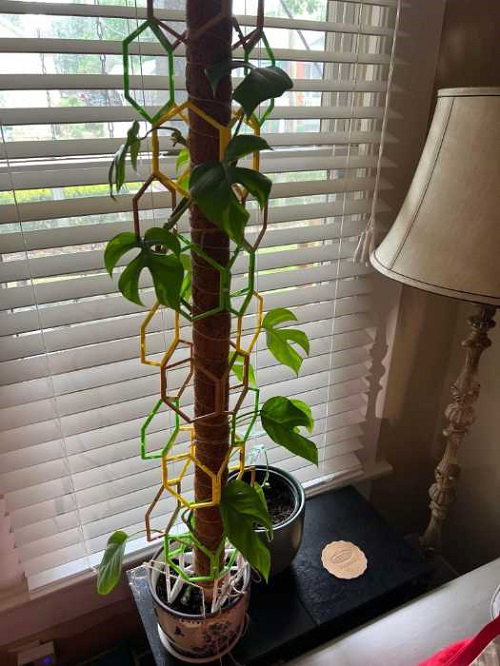
Modular Hexagon Acrylic Trellis
Interlocking plastic honeycomb grids stack upward along a central pole. Bright colorful acrylic shapes add geometric patterns behind emerging green leaves. Small stems weave through open slots as the vine reaches toward sunny windows.
What Makes It Work:
- Modular design: Snap on sections expand support as your plant grows taller.
- Modern aesthetic: Geometric shapes bring fun color contrast to green foliage.
- Water resistant: Smooth plastic material will not decay or degrade over time.
The Downside: Smooth acrylic surfaces offer zero traction for clinging aerial roots. Plant clips are necessary to keep growing stems attached to plastic bars.
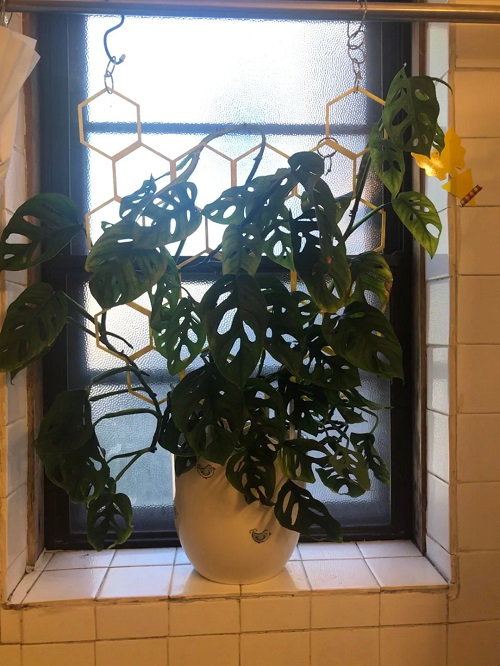
Hanging Honeycomb Window Trellis
Golden hexagon frames suspended from curtain rods turn sunny windows into vertical gardens. Light plastic grids hang behind small pots, allowing trailing vines to climb upward toward natural light. Swiss cheese leaves weave easily through open geometric slots.
What Makes It Work:
- Light access: Suspended position puts plants directly in bright window sun.
- Zero floor footprint: Hanging assembly keeps tables and floors entirely clear.
- Geometric pattern: Honeycomb cutouts frame growing foliage in a stylish way.
The Downside: Weight limitations on hanging rods restrict this setup to smaller plants. Shifting light or drafts from open windows may dry foliage out faster.
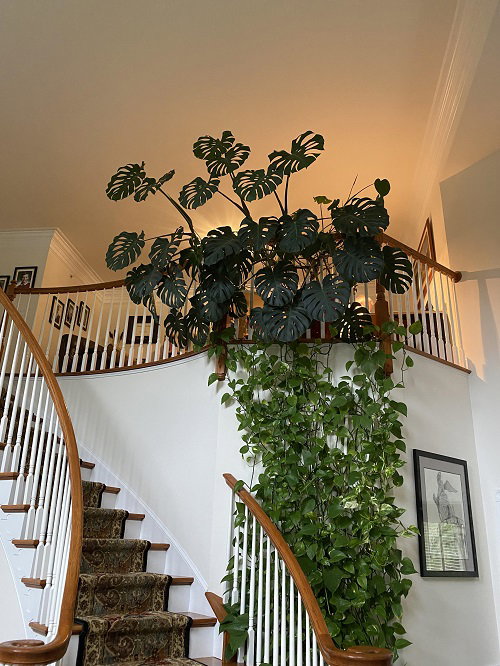
Balustrade Railing Support System
Sturdy wooden stair railings provide built-in vertical structure for huge indoor plants. Lower vines wrap around upper spindles while massive top leaves spread over landing barriers. Natural architecture replaces traditional stakes to hold heavy growth.
What Makes It Work:
- Built in strength: Solid wooden banisters handle heavy plant weight easily.
- Multi level visual: Fills two stories of home space with rich green foliage.
- Zero added cost: Utilizes existing home architecture instead of extra plant gear.
The Downside: Vines wrapping around stair railings can scratch wooden finishes over time. Moving or repotting your plant becomes extremely complex once stems entwine the banister.
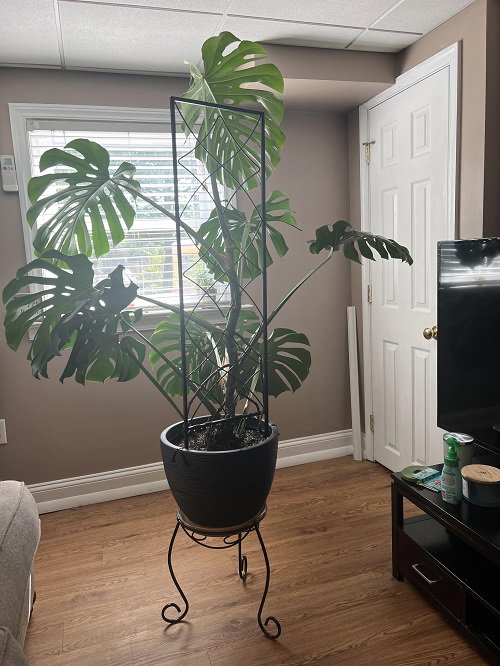
Black Iron Geometric Trellis
A tall, rectangular iron frame with a diamond grid insert provides robust vertical support inside large floor planters. The dark metal finish contrasts nicely with bright green leaves. Heavy stems stay upright, allowing oversized split leaves to spread naturally toward bright window light.
What Makes It Work:
- Industrial strength: Rigid iron construction carries heavy, mature vines without bending.
- Open grid pattern: Multiple cross sections offer convenient points for securing thick stems.
- Sleek appearance: Clean black lines add a modern architectural touch to your indoor garden.
The Downside: Smooth metal bars offer no texture for aerial roots to grab independently. Plant ties or soft garden wire are necessary to keep stems anchored to the frame.
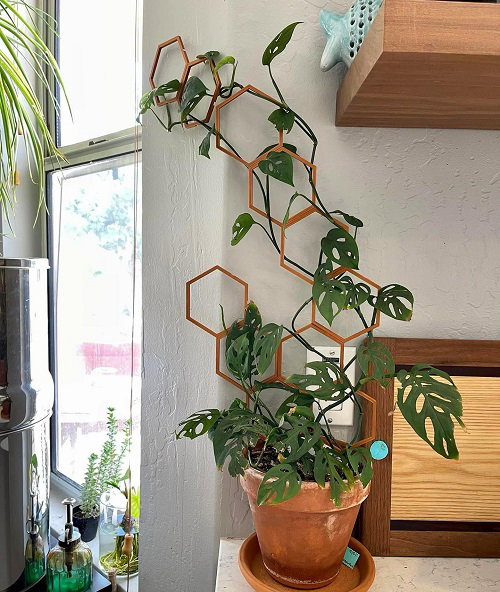
Wall Attached Modular Hexagon Trellis
Copper colored plastic honeycombs mount directly to indoor walls, expanding upward from terracotta pots. This setup guides climbing vines along room corners and vertical wall spaces. Vine stems wind through geometric openings as new Swiss cheese leaves emerge.
What Makes It Work:
- Customizable path: Modular pieces let you build a personalized climbing route along walls.
- Warm metallic accent: Terracotta shades complement traditional clay pots and green foliage.
- Space efficient design: Mounting to the wall keeps heavy pot bases clutter free.
The Downside: Adhesive or nail wall mounts can leave marks or require minor repairs if moved. Vines need manual weaving through the frames to stay on track.
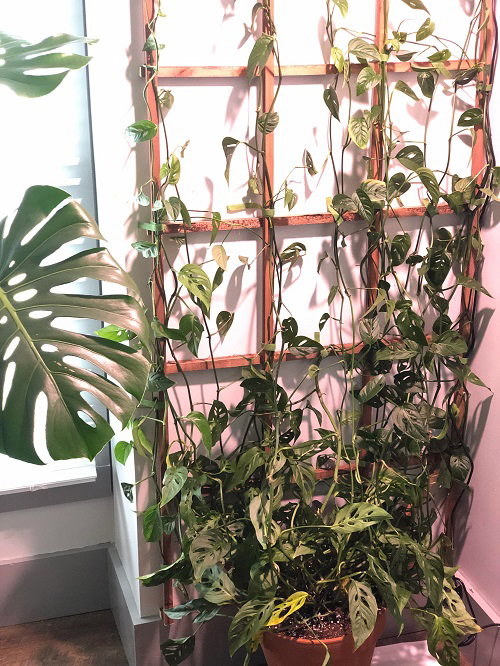
Wall Leaning Lattice Grid Trellis
A large rectangular wooden grid rests directly behind terracotta planters to support dense climbing foliage. Tall vines wrap across crossbars, filling empty wall corners with vibrant green growth. Vertical wooden slats keep heavy stems organized as plants reach toward room light sources.
What Makes It Work:
- Expansive coverage: Wide frame accommodates multiple climbing stems simultaneously.
- Simple setup: Leaning design requires minimal wall hardware for installation.
- Natural finish: Warm wood tones complement lush indoor jungle decor.
The Downside: Leaning frames can shift if bumped, so securing top corners is wise. Smooth finished wood does not retain moisture for aerial root attachment.
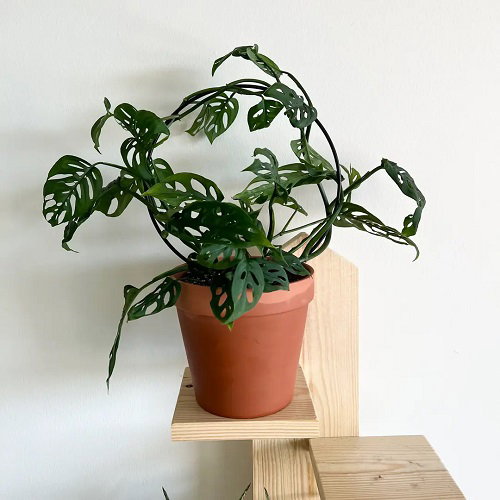
Circular Metal Hoop Trellis
A dark round metal hoop inserted into terracotta pots creates a compact circular frame for trailing vines. Stems wrap smoothly around the metal ring, creating a neat ring of foliage above the rim. Small perforated leaves follow the curved design for an elegant tabletop display.
What Makes It Work:
- Compact footprint: Fits small pots and narrow plant stands easily.
- Sculptural shape: Round hoop creates a striking geometric outline for leafy vines.
- Low maintenance support: Keeps sprawling vines contained without taking up extra floor space.
The Downside: Circular frames limit upward vertical height as vines run out of hoop room. Frequent pruning or rewinding is required to keep growth neat.
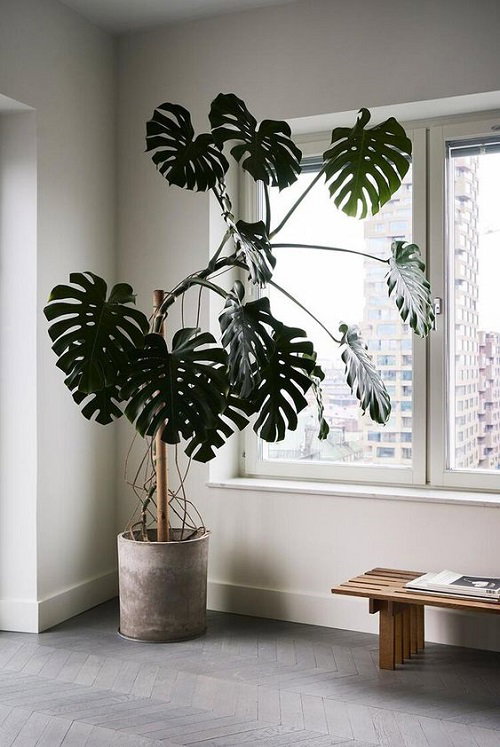
Natural Cedar Plank Support
A thick wooden plank inserted vertically into heavy pots gives climbing vines a sturdy surface to scale. Long aerial roots wrap tightly around the textured post to support massive top leaves. Natural timber offers a minimalist, organic look near large living room windows.
What Makes It Work:
- Solid stability: Thick wood boards hold massive, top heavy plants securely upright.
- Textured surface: Unfinished wood gives aerial roots a firm grip over time.
- Clean appearance: Minimalist plank design keeps focus entirely on giant split leaves.
The Downside: Untreated wood inside damp soil can gradually rot near the pot base after years. Planks add considerable weight, making large planters harder to move around.
Vertical Wooden Cedar Planks
Matching wooden boards set inside raised planters offer parallel climbing paths for compact Monstera varieties. Dense foliage covers the vertical timber from base to top. Sleek white pots elevated on wooden stands complete a clean, modern plant display.
What Makes It Work:
- Dual vertical posts: Allows multiple vines to grow upward in a balanced arrangement.
- Full foliage cover: Broad planks give leaves a flat backing, creating a dense green wall effect.
- Modern styling: Clean wood boards pair nicely with contemporary indoor planters.
The Downside: Solid wooden boards obscure light from behind, creating potential shade spots for lower leaves. Planks cannot be easily extended once vines grow past the top edge.
Multi Stake Cage Frame
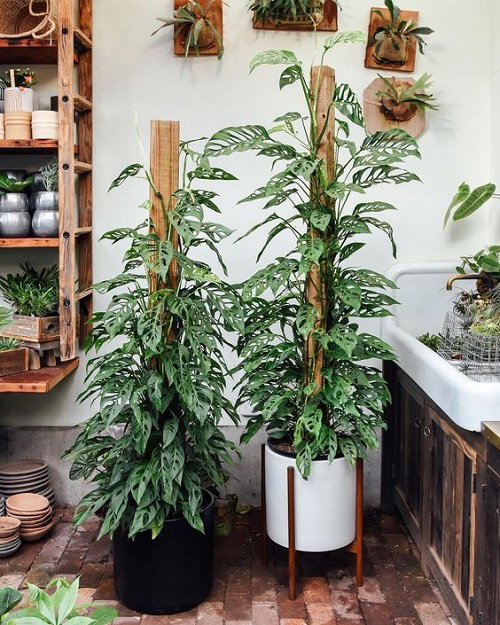
Multiple slim wooden stakes positioned around the pot rim create a wide internal cage for large plants. Sturdy bamboo rods enclose spreading stems, holding massive outer leaves inside a central boundary. Open tops allow upper growth to expand freely toward sunlit ceiling windows.
What Makes It Work:
- 360 degree containment: Prevents wide spreading leaves from taking over room walking paths.
- Adjustable positioning: Individual stakes can be moved to support specific heavy stems.
- Budget friendly design: Simple bamboo garden stakes provide functional structural support easily.
The Downside: Exposed stake tops can look messy if stems do not completely cover them. Outer foliage can appear tightly packed if stakes are placed too close together.
Conclusion
The right Monstera trellis can support healthy climbing growth while turning your plant into an eye catching part of the room. Wooden trellises, moss poles, wall supports, and simple DIY structures can all work depending on the size of your plant and available space.
Choose a sturdy design that gives stems and aerial roots plenty of support as the plant grows. With regular training and a well placed trellis, your Monstera can develop a more organized climbing shape while showing off its impressive foliage.
Frequently Asked Questions
Does a Monstera need a trellis?
A Monstera can grow without one, but climbing support helps mimic its natural growth habit. A trellis can also keep mature stems more organized as the plant becomes larger.
What type of trellis is best for Monstera plants?
Sturdy wooden trellises, moss poles, coir poles, bamboo supports, and strong wall mounted structures can work well. Choose one based on the size and weight of your plant.
When should I add a trellis to my Monstera?
You can introduce support once the plant begins producing longer stems or aerial roots. Adding it while the plant is still manageable can make training easier.
How do I attach a Monstera to a trellis?
Position the main stems against the support and secure them gently with soft plant ties. Avoid tying petioles or tightening ties enough to damage the stems.
Can Monstera aerial roots attach to a trellis?
Aerial roots may grip textured supports or grow around them. Moss and coir poles can provide surfaces that are easier for aerial roots to interact with than smooth materials.
Can I make a DIY Monstera trellis?
Yes. Wood, bamboo, garden stakes, wire, and other sturdy materials can be used to create a simple support. Make sure the finished structure is stable enough for the plant as it grows.